How to build healthy (but actually satisfying) meals

Building healthy meals that are actually satisfying - a top talking point in clinic!
One of the first things I teach my patients and clients is how to build balanced meals that are filling and actually satisfying.
In my opinion, there’s nothing worse than unseasoned protein with rice & veggies - there’s so much more to healthy eating.
Making healthier meals that actually taste good means you’re much more likely to stick to eating well.
And when a meal is tasty and satisfying, you’re more likely to feel content afterwards!
1. Building the meal: a guide to meal structure
Balanced eating includes all food groups. There’s no need to cut out carbohydrates or fat! Both of these components play important roles in our bodies, and contribute to the satisfaction we experience at mealtimes.
Carbohydrates are your body’s main source of energy. They help fuel your brain and muscle, and also provide important nutrients such as B vitamins and fibre, particularly when choosing wholegrain options. Choose a carbohydrate that you enjoy - this could be potatoes, rice, pasta, bread, oats, couscous or another grain.
Fat helps your body absorb the fat-soluble vitamins A, D, E and K. They are also important for hormone and brain health - particularly unsaturated fats, such as those found in olive oil, avocado, nuts and seeds. So it’s beneficial to include a small amount at each meal, while being mindful of portions if you’re trying to lose weight, as fat is more energy-dense.
Protein is the internet’s favourite nutrient - and it is important, with a major role in supporting tissue repair and maintaining muscle mass. However, it’s not the only thing we should be focusing on when building our meals. Other components, such as fibre - are equally as important!
Fruit & vegetables are a source of fibre, vitamins and minerals. Different colours provide different nutrients, so aim for plenty of variety. They can also help you feel full, which can be helpful if you’re trying to manage your appetite.
I often discuss the balanced plate (see diagram below) with patients and clients in clinic, to use as a guide to build their meals. The proportions you need will vary slightly depending on your goals and energy needs, but the basic principle is:
⅓ to ½ plate vegetables (or 1-2 portions of fruit)
¼ plate protein
The rest complex carbohydrates
A portion of healthy fats (e.g. 1 tsp olive oil, ½ an avocado or 1 tbsp nut butter or seeds)
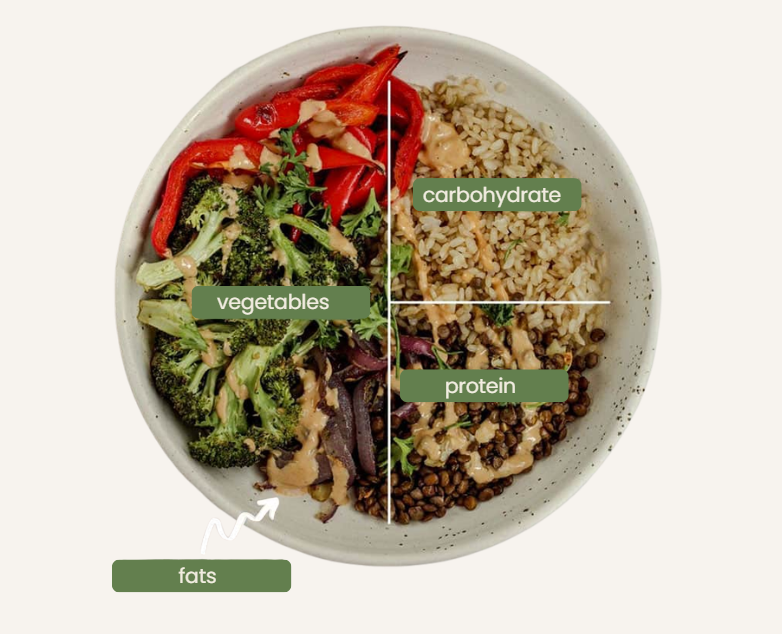
The Balanced Plate - a great guide for building filling meals.
The balanced plate is a great starting point for building balanced, satisfying meals that don’t leave you feeling restricted.
A satisfying meal isn't just about getting the right nutrients - it's also about eating enough and choosing foods that keep you feeling full afterwards.
Including a combination of protein, fibre, carbohydrates and fats can help with fullness, while flavour, texture and enjoyment are important too.
2. Make it satisfying: adding flavour
Flavour is an important but underrated thing to consider when trying to eat well. Healthy meals really don’t need to be bland or boring!
If your meals are flavourful and enjoyable, you're more likely to feel content after eating rather than feeling like you've had to settle for something you don't really want.
Things to consider when seasoning food:
Salt content – ideally, we don’t want to be adding too much salt to our meals. On average, adults in the UK consume around 8g of salt per day - more than the recommended daily maximum of 6g. Too much salt can contribute to problems such as high blood pressure and cardiovascular disease. You don’t need to avoid salt completely, but for most people, it can be beneficial to cut down.
Herbs and spices – adding dried and fresh herbs and spices can be an easy but beneficial way to add flavour without additional calories or salt. They also contribute to the overall variety of plant foods in your diet.
Lemon and lime – an excellent way to add vitamin C and make the flavours in your meals “pop”. I find that citrus helps to bring out the flavour in my meals and reduces the need for additional salt.
Vinegar – balsamic, apple cider, red or white wine vinegar can all be a good way to add some zing to meals. For example, adding a teaspoon of balsamic vinegar to a bolognese, or apple cider vinegar to a chickpea smash, can really enhance the flavour.
Flavoured oils – garlic, chilli and sesame oils can be a great addition to cooking. But add them sparingly if you’re trying to manage your weight, as oils are quite energy-dense.
Adding texture – toasted nuts, seeds, fresh herbs or crispy onions can make a perfect finish to a meal. Adding different textures can make a meal more interesting and enjoyable to eat.
3. Make it enjoyable
Research tells us that how we present our meals can influence how satisfied we feel. Try to present your meal in a way that looks good to you - this could mean adding some fresh herbs, a yoghurt drizzle or serving it in your favourite dish.
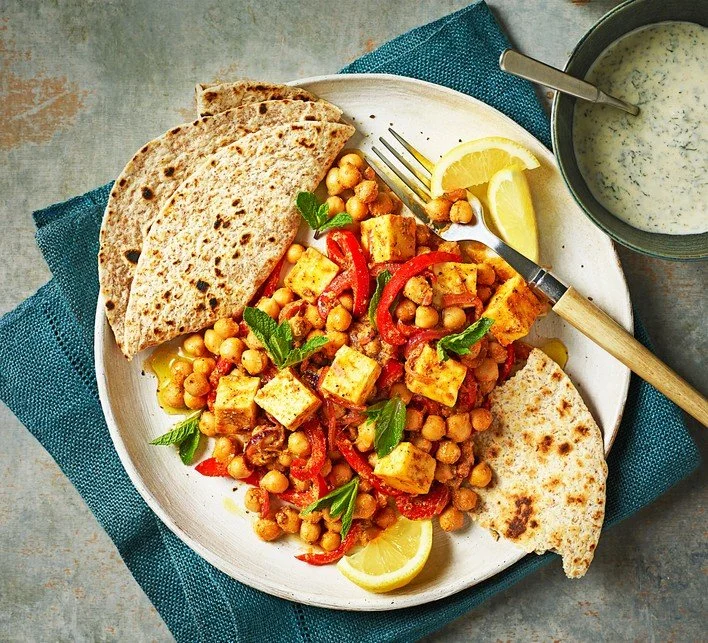
You eat with your eyes! The appearance of food can affect how it tastes and how you experience the flavour.
We also know that enjoying meals without distractions can allow you to better appreciate the flavours and textures of your food, as well as helping you tune into your hunger cues. So, rather than eating in front of the TV, try creating a comfortable space where you can sit down and properly enjoy your meal.
It can also be a nice opportunity to connect with other members of your household. We all live busy lives, so setting aside time to enjoy a meal together can allow for connection and a quick catch-up.
Creating a good environment at mealtimes can have a big impact on how satisfied you feel after a meal - so it’s worth finding out what works for you.
If you enjoyed this article, feel free to share it with a friend. If you’d like personalised advice on how to build your meals to meet your goals, feel free to get in touch!
